Tile roofing
Tile Roofing for Arizona Homes
Tile is the right roof for this climate — and the most misunderstood. The tile you can see is armor; the underlayment you can't see is the waterproofing. Nearly every tile roof we work on in the Valley needs attention to the second, not the first.
AZ ROC #223965 / B-3 · Licensed, Bonded & Insured · Family-owned since the 1980s
How tile roofs actually work
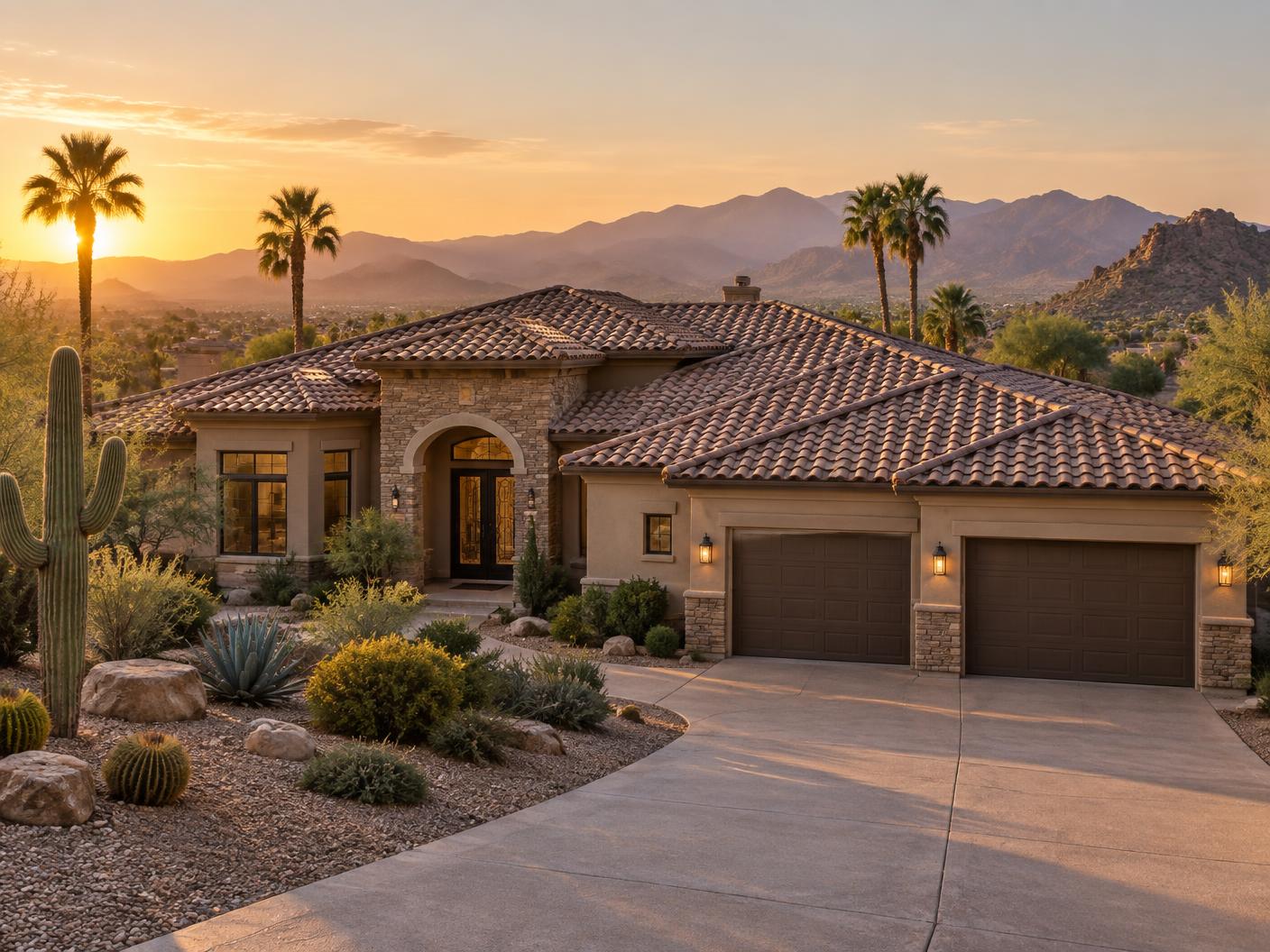
Picture two layers. On top, concrete or clay tile takes the sun, the hail and the wind, and sheds the bulk of the water. Underneath, a membrane laid over the decking catches whatever gets past — and in a monsoon, plenty gets past. That membrane is the roof's real waterproofing.
Tile handles Arizona better than almost anything else: it doesn't mind UV, it insulates the deck, it lasts for decades, and it looks the part on Valley architecture. The membrane under it has a much shorter life. Heat radiating off the deck bakes it from below, thermal cycling flexes it every day, and eventually it goes brittle, cracks and stops doing its job.
Which is why 'my tile roof looks perfect' and 'my tile roof leaks' are not a contradiction. And why the fix is almost never new tile.
Our tile roofing work
- Tile repair — cracked, slipped, broken and previously botched repairs
- Underlayment replacement with your existing tile lifted and re-set
- Full tile re-roofs in new concrete or clay tile
- Valley, flashing, headwall and parapet detailing where tile roofs actually leak
- Penetration work — pipe jacks, vents, coolers, skylights, solar mounts
- Decking repair uncovered during tile lift, shown and priced before we proceed
What a tile underlayment replacement involves
01Inspection and assessment
We check the state of the underlayment, count what tile is salvageable, and look at the flashing and penetrations before quoting anything.
02Careful tile lift and stack
Your tile comes off in sections and is stacked on the roof to be re-used. Breakage happens on any tile lift — we plan for replacements rather than pretending it doesn't.
03Deck inspection and repair
With the deck bare we find the soft spots and old leak damage. Anything that needs replacing gets shown to you with photos and priced before work continues.
04New underlayment and metal
Fresh underlayment, new valley metal, drip edge and flashing detailed properly at walls and penetrations — the details that decide whether the next monsoon gets in.
05Tile re-set and cleanup
Tile goes back down to manufacturer specification, broken pieces swapped for matching replacements, then full cleanup and a walkthrough with photos of what was underneath.
Arizona-specific tile considerations
Foot traffic is a real cause of tile damage here. Cable installers, HVAC techs, solar crews and painters walk tile roofs, and tile walked the wrong way cracks. A lot of the 'mystery' leaks we trace start at a cracked tile above a piece of rooftop equipment.
Solar is the other big one. Panels mounted through tile without proper flashing are one of the most common sources of new leaks on otherwise sound Valley roofs. If you're planning solar, get the roof assessed first — doing underlayment work after the panels are up costs considerably more.
Finally, debris. Valleys collect dust and gravel, it hardens, and water starts running where it wasn't meant to. Clearing valleys is cheap; repairing what a blocked valley does over two monsoon seasons isn't.
Common Questions
- My tile roof looks fine — why would it need work?
- Because the tile isn't the waterproofing. Concrete and clay tile are a durable shield that can outlast several underlayments; the felt or synthetic membrane beneath it is what keeps water out, and Arizona heat is what wears it out. A tile roof in perfect cosmetic condition can be one storm away from a leak.
- What is an underlayment replacement?
- We lift your existing tile, strip off the failed underlayment, inspect and repair the decking, install new underlayment and flashing, then re-set your tile. You keep the look of your home and the tile you already paid for, and the roof is effectively new where it counts.
- How long does tile underlayment last in Phoenix?
- It varies with the material used, the roof's exposure and how well it was ventilated, but on Valley homes it is common for the original underlayment to be the thing that ages out first, well before the tile does. An inspection tells you where yours stands rather than guessing from the roof's age.
- Can you match broken tiles on an older roof?
- Often, yes — many profiles are still available, and we can also salvage sound tile from less visible areas to keep the front of the house consistent. If a profile is discontinued we'll tell you your options honestly.
Related Roofing Services
See every service on our roofing services page , or head back to the Ace Roofing home page.
Where We Provide This Service
We work across the Valley. Start with your city for the roof types and problems we see most in that area:
- tile roofing in Peoria, AZ
- tile roofing in Phoenix, AZ
- tile roofing in Glendale, AZ
- tile roofing in Surprise, AZ
- tile roofing in Sun City, AZ
- tile roofing in Scottsdale, AZ
Goodyear, Buckeye, Anthem and Cave Creek are covered too — see every area we serve.
Wondering what's under your tile?
A free inspection tells you whether your underlayment has years left or is the reason your ceiling is staining. Photos included, no pressure either way.